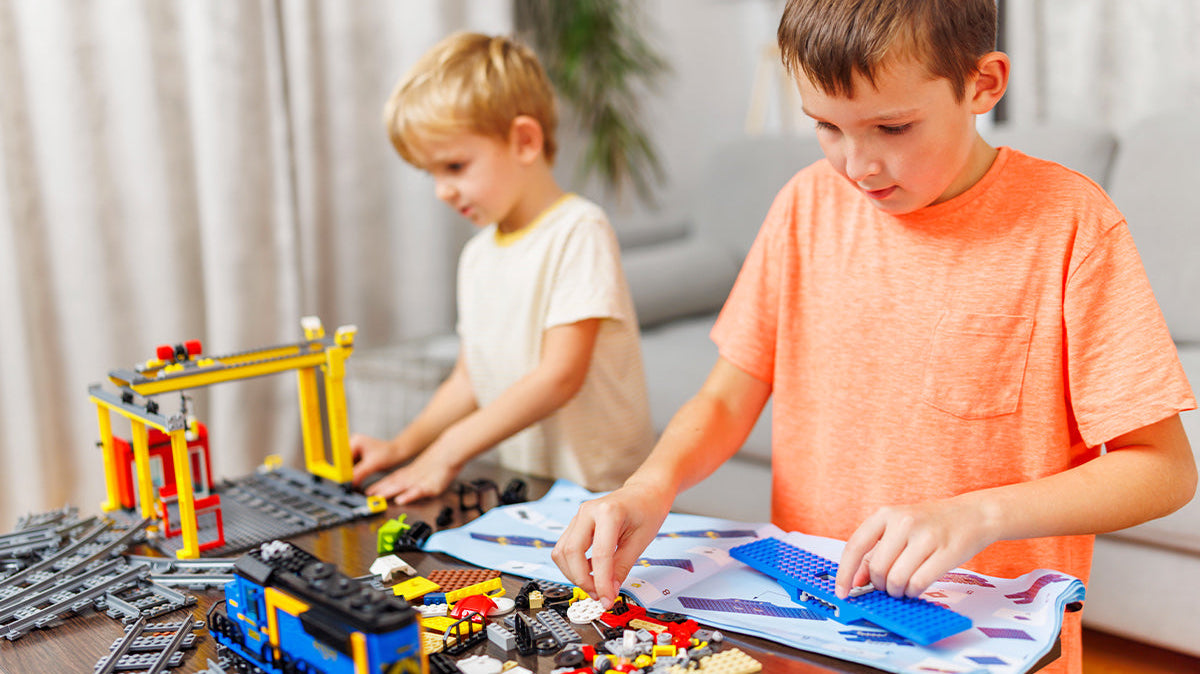
Educational toys are not just play items — they are learning tools designed around how a child’s brain develops. Unlike passive entertainment, these toys require thinking, interaction, and decision-making, which directly supports early brain growth.
1. Learning by Doing (Hands-On Cognitive Development)
Children learn best through hands-on experiences. STEM and early learning toys encourage children to:
-
Test ideas
-
Observe outcomes
-
Adjust strategies
-
Try again
This process strengthens neural connections far more effectively than passive screen-based learning.
Educational toys turn abstract concepts like balance, cause-and-effect, and spatial reasoning into real experiences children can touch and understand.

Key Learning Skills Children Develop Through Educational Toys
Problem-Solving & Logical Thinking
STEM toys present challenges that don’t have a single answer. Children must:
-
Analyze situations
-
Experiment with solutions
-
Learn from mistakes
This builds independent thinking, a skill linked to academic success later in life.
Creativity & Imagination
Unlike traditional toys with fixed outcomes, educational toys are open-ended. Children can build:
-
Forts
-
Towers
-
Tunnels
-
Imaginary worlds
This boosts creative thinking, storytelling skills, and innovation.
Fine Motor Skill Development
Grasping rods, connecting pieces, stacking blocks, or assembling kits strengthens:
-
Finger control
-
Hand-eye coordination
-
Muscle precision
These skills directly support writing, drawing, and daily self-care tasks.

Confidence & Emotional Growth
When children solve problems on their own, they develop:
-
Confidence
-
Patience
-
Emotional resilience
Completing a structure or solving a challenge creates a sense of achievement — something passive toys rarely provide.
Educational Toys vs Normal Toys: A Clear Comparison
| Feature | Educational / STEM Toys | Traditional Toys |
|---|---|---|
| Learning Value | High – skill-based | Low – entertainment only |
| Creativity | Encourages imagination | Limited outcomes |
| Screen-Free | Yes | Often screen-dependent |
| Long-Term Use | Grows with the child | Quickly outgrown |
| Cognitive Development | Strong | Minimal |
| Parent-Child Interaction | High | Low |
Educational toys are investments in development, while normal toys often provide short-lived excitement without lasting benefits.
Lessons Children Learn Through Educational Play
Through consistent use, children naturally learn:
-
Cause and Effect – “If I change this, what happens?”
-
Spatial Awareness – Understanding shapes and structure
-
Teamwork – Cooperative play with siblings or parents
-
Planning & Sequencing – Building step by step
-
Focus & Patience – Completing longer tasks
These are life skills, not just play skills.
Why Educators & Parents Prefer STEM Toys
Many early education experts recommend STEM toys because they:
-
Support school readiness
-
Improve attention span
-
Reduce behavioral issues caused by overstimulation
-
Encourage curiosity instead of consumption
Parents searching for:
-
“educational toys for learning at home”
-
“best STEM toys for kids”
-
“screen-free learning toys”
are actively looking for tools that teach without pressure.
Real-Life Learning Scenario
A parent introduces a fort-building STEM kit to replace screen time. At first, the child builds simple shapes. Over time:
-
Structures become more complex
-
Planning improves
-
Vocabulary expands as the child explains ideas
-
Frustration tolerance increases
This type of growth cannot be achieved with passive toys.
Why Educational Toys Deliver Better Long-Term Value
Unlike novelty toys, STEM toys:
-
Stay relevant for years
-
Adapt to different ages
-
Support multiple learning stages
-
Encourage repeated use
This makes them more cost-effective and developmentally valuable.
Recommended STEM & Educational Toys From Moss Roze (By Learning Benefit)
To help parents choose the right educational toys based on learning goals, here are carefully selected Moss Roze STEM and early learning toys, categorized by the skills they develop.
These toys are designed to teach through play, reduce screen dependency, and support real cognitive growth.
1. Creativity, Engineering & Problem-Solving Skills
Fort Building Blocks Kit (120-Piece STEM Construction Set)
This fort-building kit allows children to design and build their own structures using rods and balls, helping them understand:
-
Structural balance
-
Geometry and spatial awareness
-
Engineering logic
Why it’s better than normal toys:
Unlike fixed toys, children can build something new every time, improving creativity and long-term engagement.
Best for ages: 3–12
Skills developed: STEM thinking, creativity, teamwork

Magnetic Building Blocks Blue Castle Kit (Montessori STEM Tiles)
Magnetic blocks help children visualize shapes, symmetry, and construction principles while encouraging independent play.
Key learning advantages:
-
Improves spatial reasoning
-
Encourages imagination and design thinking
-
Strengthens hand-eye coordination
Best for ages: 2–12
Skills developed: Early engineering, fine motor skills, creativity

2. Cognitive Development & Early Learning (Montessori-Based)
Montessori Wooden 3D Jigsaw Puzzle (Cartoon Animals)
Designed for early cognitive development, this puzzle improves:
-
Shape recognition
-
Memory retention
-
Problem-solving ability
Why parents love it:
Natural wood materials, safe design, and screen-free learning.
Best for ages: 2–6
Skills developed: Cognitive thinking, focus, patience

Montessori Math & Fishing Wooden Toy (5-in-1 Learning Set)
This multifunctional set teaches:
-
Counting
-
Number recognition
-
Color sorting
-
Hand-eye coordination
Educational value:
Children learn math concepts through play rather than memorization.
Best for ages: 3–6
Skills developed: Early math skills, coordination, logic
3. Motor Skills & Sensory Development
Montessori Wooden Bead Building Blocks (0–4 Years)
Specially designed for babies and toddlers to:
-
Improve grip strength
-
Enhance finger control
-
Stimulate sensory development
Why it stands out:
Unlike electronic toys, it strengthens real motor development essential for writing later in life.
Best for ages: 0–4
Skills developed: Fine motor skills, sensory awareness

Baby & Toddler Musical Activity Learning Table
This interactive table introduces:
-
Numbers
-
Shapes
-
Sounds
-
Colors
Learning benefit:
Supports early brain development through sound and touch interaction.
Best for ages: 6 months–3 years
Skills developed: Sensory learning, listening, coordination

4. STEM Through Motion, Speed & Logic
Remote Control Cars (Beginner to Advanced)
-
1:16 RC Drift Racing Truck (20KM/H)
-
High-Speed 4WD RC Car (70KM/H Brushless)
RC vehicles introduce:
-
Cause-and-effect thinking
-
Hand-eye coordination
-
Mechanical understanding
Why RC toys are educational:
Children learn speed control, direction, and mechanical logic while having fun.
Best for ages: 6+
Skills developed: Reaction time, spatial awareness, problem-solving

Brushless F4U Corsair RC Plane (Flight Learning)
Flying RC planes teaches:
-
Physics basics
-
Balance and control
-
Focus and patience
Best for ages: 10+
Skills developed: STEM physics, coordination, discipline

5. Music, Communication & Confidence Building
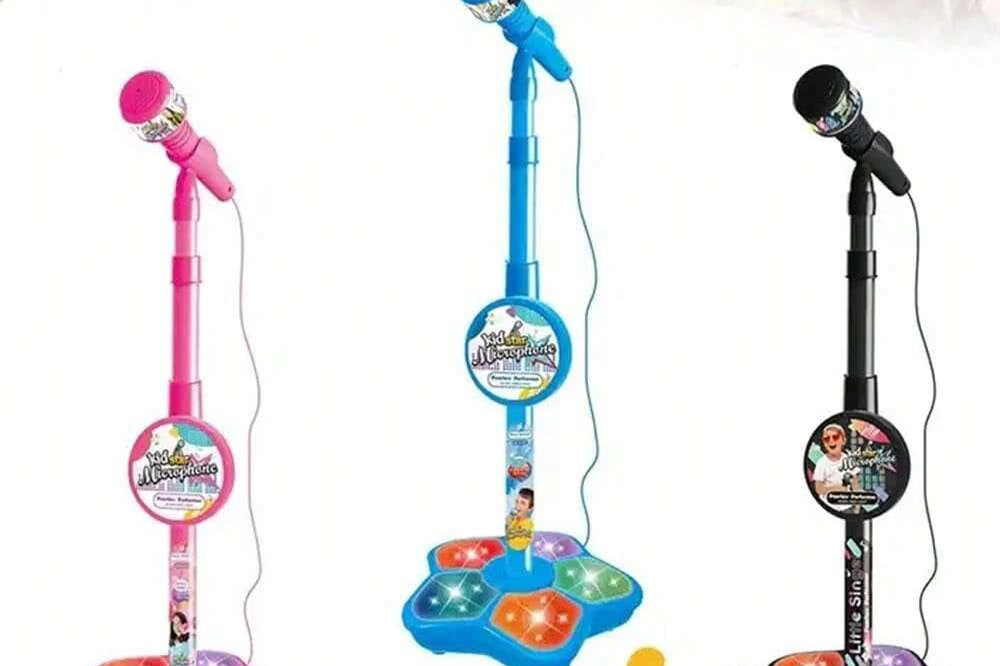
Kids Karaoke Machines & Microphone Stands
Music-based toys help children:
-
Improve speech and pronunciation
-
Build confidence
-
Express creativity
Educational advantage:
Encourages communication skills and social interaction.
Best for ages: 3–12
Skills developed: Language development, confidence, creativity


6. Active Learning & Physical Coordination
LED Scoring Arcade Basketball Game
This interactive toy helps:
-
Improve coordination
-
Encourage physical movement
-
Teach turn-taking and goal-setting
Best for ages: 2–18
Skills developed: Motor coordination, focus, healthy activity
Bow & Arrow Sets (Suction & Foam Dart)
These toys develop:
-
Aim precision
-
Focus
-
Hand stability
Best for ages: 6–12
Skills developed: Concentration, motor skills, spatial accuracy
Why Moss Roze Educational Toys Perform Better Than Regular Toys
Moss Roze focuses on learning-driven play, not short-term entertainment.
Our toys:
-
Support cognitive growth
-
Encourage creativity instead of passive consumption
-
Improve motor skills and confidence
-
Reduce screen dependence
-
Grow with the child
Each product is selected to provide long-term educational value, not just momentary excitement.
Educational and STEM toys shape how children think, solve problems, and express creativity.
By choosing learning-focused toys from Moss Roze, parents invest in skills that last a lifetime, not toys that are forgotten in weeks.
Final Thought: Toys That Teach Without Feeling Like Learning
The best educational toys don’t feel like lessons — they feel like play.
But behind that play is real learning, real development, and real growth.
For parents who want their children to grow smarter, more confident, and more creative, educational and STEM toys outperform traditional toys in every meaningful way.